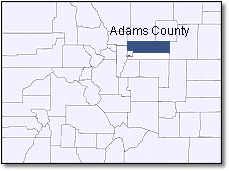
Nestled on Colorado's high plains just northeast of Denver, Adams County blends small-town charm, agricultural roots, and deep pioneer history with easy access to big-city amenities. For travelers interested in heritage tourism, wide-open landscapes, and the evolution of the American West, this corner of Colorado offers a rewarding and less-crowded alternative to the state?s better-known mountain destinations.
Where Is Adams County and Why Visit?
Adams County lies along Colorado?s Front Range, stretching from the northeastern edges of the Denver metropolitan area out toward open prairies and farming communities. Visitors are often surprised to find that, beyond highways and suburbs, the county preserves traces of homesteads, railroad-era towns, and early agricultural settlements that tell the story of Colorado before skiing and resorts took center stage.
Today, travelers come to Adams County to:
- Trace the footsteps of homesteaders and pioneer families across the high plains
- Experience a more relaxed, local side of Colorado away from crowded mountain corridors
- Use the county as a convenient base for exploring Denver and the wider Front Range
- Enjoy scenic drives, agricultural landscapes, and big skies that define the eastern half of the state
Historical Roots: From Homesteads to High Plains Communities
Adams County?s development reflects key chapters in Colorado?s history. As the railroad advanced across the plains and irrigation projects opened new land for cultivation, settlers established farms, small towns, and community institutions that still shape the region.
Pioneer Settlement and the High Plains Landscape
The county?s early settlers contended with semi-arid grasslands, strong winds, and dramatic temperature swings. Their response helped define the look and feel of the region: windbreak trees, irrigation ditches, barns, and community gathering spots that sprang up along transportation routes. For modern visitors, exploring backroads and historic districts offers an informal open-air museum of Colorado?s agricultural past.
Railroad Towns and Early Commerce
Many Adams County communities began as stops along important rail lines, serving as hubs for grain, livestock, and supplies. While some towns have grown into modern suburbs, others retain quieter main streets and structures that hint at their railroad-era origins. Walking these districts can add historical depth to any trip, especially for travelers interested in how transportation shaped settlement in the West.
Heritage Travel: Exploring Adams County?s Past
Heritage travelers in Adams County can structure their visit around local museums, historic cemeteries, and archival resources that illuminate the stories of families, communities, and shifting county boundaries across the decades.
Local History and Genealogy Tourism
Adams County is a rewarding destination for travelers tracing family roots in Colorado. The area?s long record of homesteading, farming, and migration means that many genealogical trails lead back to its townships and rural districts. While on the ground, visitors can:
- Explore local history collections to understand how communities formed and changed over time
- Visit historic cemeteries to locate ancestors and interpret gravestone symbolism typical of the region
- Drive through former rural precincts that once defined political and social boundaries
Even travelers without personal ties to the county can gain insight into broader themes in western U.S. history?land use, water rights, transportation, and the growth of small-town institutions.
Cemeteries as Windows Into the Past
Cemeteries in Adams County offer a quiet and reflective way to connect with the region?s story. Dates, place names, and inscriptions reveal waves of migration, family clustering, and periods of hardship and prosperity. When visiting, travelers should move respectfully, avoid disturbing grounds or memorials, and treat these places as both historical resources and active sites of remembrance for local communities.
Geography and Climate: Understanding the High Plains
Travelers often picture Colorado as purely mountainous, but Adams County lies within the high plains?elevated grasslands that roll eastward from the Rockies. Understanding this geography helps visitors plan activities and pack appropriately.
Big Skies and Open Horizons
The county?s scenery is defined by open vistas, agricultural fields, distant towns, and expansive skies that showcase dramatic sunrises, sunsets, and storm fronts. This makes Adams County appealing for photographers, road trippers, and anyone who appreciates quiet drives across spacious landscapes.
Weather and Seasonal Travel Tips
Conditions in Adams County can vary widely by season:
- Spring: Transitional weather with potential for wind and thunderstorms. Rural roads can be muddy in wet periods.
- Summer: Warm to hot days, cooler evenings, and strong sun at altitude. Afternoon thunderstorms can pass quickly but be intense.
- Autumn: Often one of the most comfortable times to visit, with clear skies and harvest activity across agricultural areas.
- Winter: Cold snaps and occasional snow. Conditions may change quickly, so travelers should monitor forecasts, especially when driving in open, exposed areas.
Packing layers, sun protection, and sufficient water is advisable year-round, particularly when exploring rural or less-developed areas of the county.
Planning Your Stay in Adams County
Adams County?s location along major transportation corridors makes it a practical base for exploring both local heritage sites and urban attractions throughout the Denver area.
Choosing Where to Stay
Accommodation options range from suburban hotels with easy highway access to smaller properties closer to the county?s quieter districts. Travelers interested primarily in historic exploration may prefer staying near older town centers, which can offer shorter drives to cemeteries, former precincts, and community landmarks. Those blending heritage tourism with city outings may opt for lodging near major routes that connect quickly to Denver and neighboring Front Range communities.
Transportation and Getting Around
While some areas are served by public and regional transportation, a car remains the most flexible way to explore Adams County?s historic and rural sites. Visitors planning genealogical or heritage-focused itineraries often benefit from:
- Using detailed maps or GPS to locate former precincts, townships, and lesser-known cemeteries
- Allowing extra time for unpaved or lightly traveled roads
- Carrying fuel, water, and basic supplies when driving into sparsely populated areas
Respectful and Responsible Heritage Tourism
Because Adams County includes active communities, working farms, and sites of ongoing local significance, heritage travelers should approach exploration thoughtfully.
Visiting Rural and Agricultural Areas
Many historical points of interest sit within or near farmland and privately owned property. Visitors should stay on public roads, obey signage, and avoid entering fields or buildings without explicit permission. Observing from a distance, using pull-outs safely, and minimizing dust and noise help maintain positive relationships with local residents.
Engaging With Local Stories
Conversations with longtime residents, when appropriate, can enrich a trip to Adams County. Travelers may learn about how the landscape has changed, how older precinct names map onto today?s geography, and how families trace their own narratives across the county. Approaching these exchanges with curiosity and respect can turn a simple road trip into a deeper cultural experience.
Sample Heritage-Focused Itinerary
To make the most of a short visit, travelers might follow a simple one- or two-day structure built around the county?s historical themes.
Day One: Orientation and Local History
- Begin with an overview of the county?s development, focusing on settlement patterns, railroads, and agriculture.
- Walk through a historic town center to observe building styles, street layouts, and patterns of commercial growth.
- Visit a nearby cemetery to interpret dates, family clusters, and cultural markers from gravestones.
Day Two: Rural Exploration and Reflection
- Drive a loop through rural portions of Adams County, noting irrigation infrastructure, homestead-style buildings, and older farmsteads.
- Stop at designated viewpoints or public spaces to photograph the high plains landscape.
- End the day with a review of historical notes, maps, or genealogical findings to connect sites visited with broader regional history.
Balancing City Access With High Plains Quiet
One of Adams County?s strengths for travelers is its dual identity: part of a dynamic metropolitan region yet closely tied to the plains and agricultural heritage of Colorado. This makes it especially appealing for visitors who want to experience more than a single facet of the state. By using the county as a base, travelers can combine museum visits and urban dining with day trips to rural roads, historic communities, and contemplative heritage sites.
Whether you are following family records, interested in the evolution of small-town Colorado, or simply drawn to expansive horizons and quiet backroads, Adams County offers a subtle but resonant window into the story of the American West.